From 4 to 1
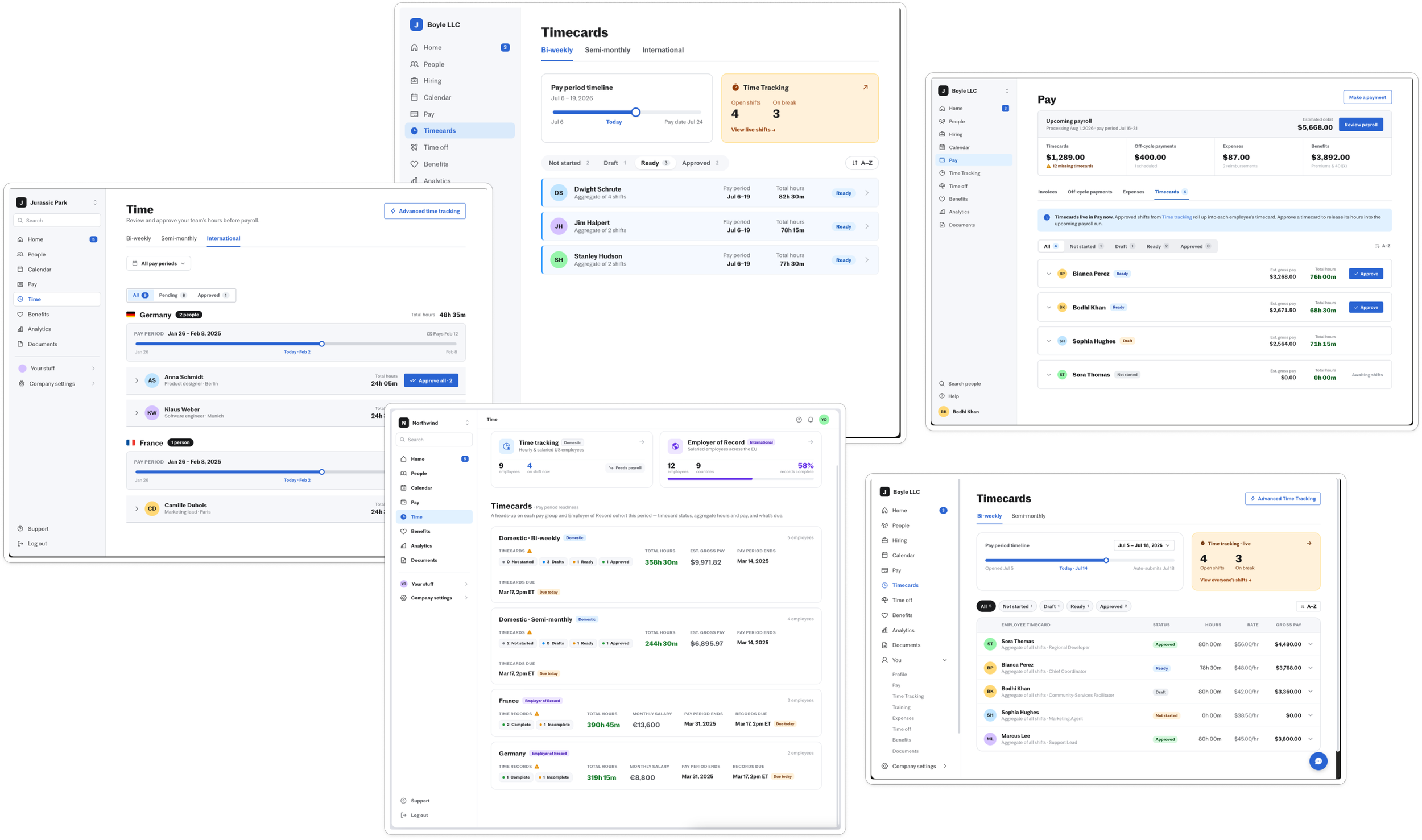
Justworks timesheets were facing a reckoning. We'd spent years maintaining 4 products, each stuck in a different design system, back end, and experience. It was time to turn 4 into 1.
This project is still ongoing.
The roadmap to one.
🏁 Modernize ASO timesheets
Update ASO timesheets to the PEO standard of daily time entry.
Launched September 2025
Daily time entry for timesheets
🏁 Bring ASO to PEO Parity
Use the ASO foundation to build in PEO functionality.
Phase: In development
Employee time entry
Import hours
Overtime calculations
🏁 EOR time records
Build a time-recording system that meets international standards.
Phase: Concept
Work start and end times.
🏁 Time tracking
Complete consolidation by building the time-tracking product in ASO.
Phase: Concept
Shift tracking
Geofencing
Phase 1: Moderize ASO timesheets
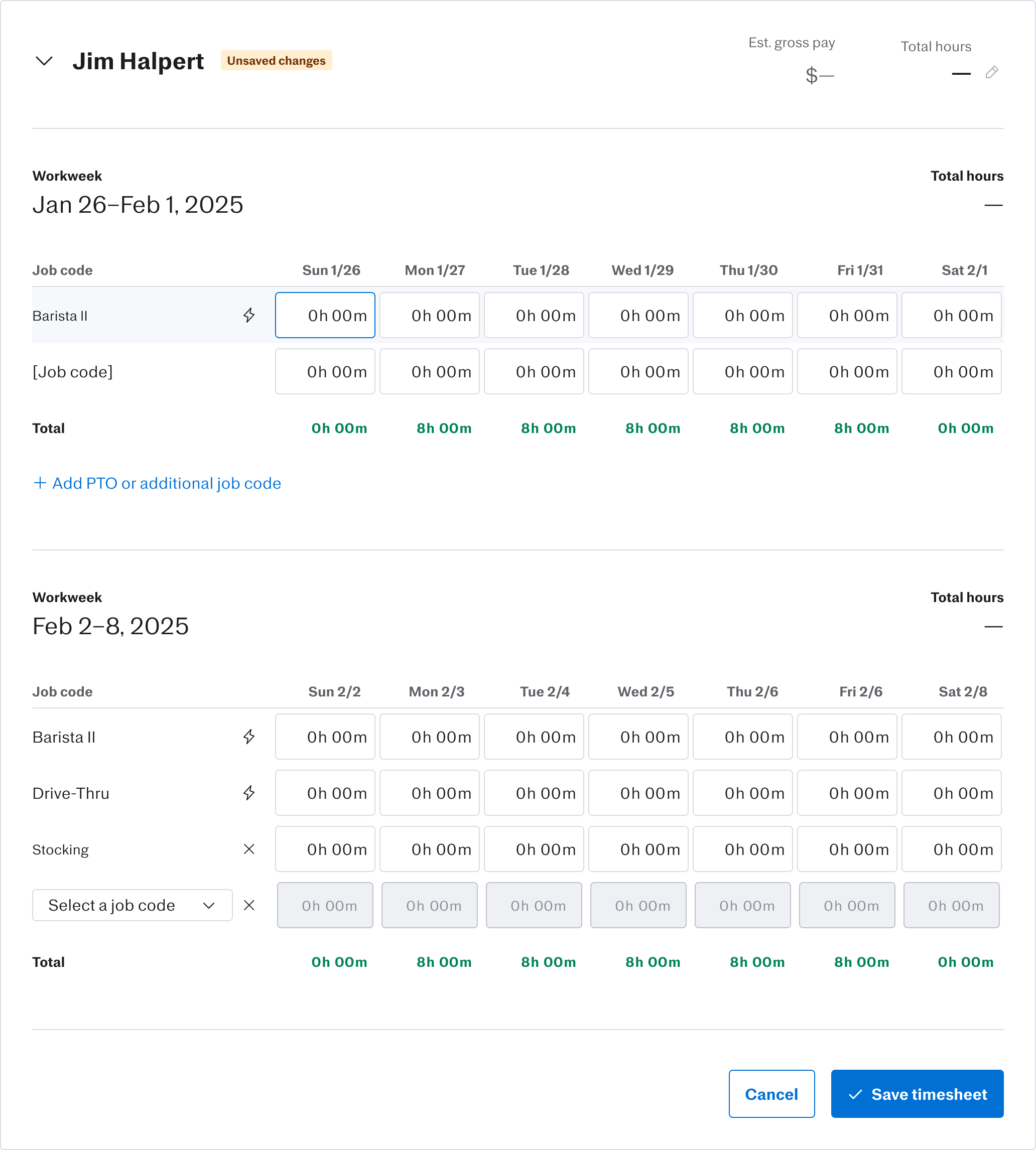
The first phase focused on establishing a strong foundation. Switching ASO customers to daily time entry introduced a brand-new component to the Justworks UI kit: the individual employee timesheet.
Every employee receives one; each phase builds upon it, and every part of the unified product relies on it. Daily entry also enabled more precise overtime calculations and improved compliance with best practices.

Phase 2: Bring ASO to PEO Parity
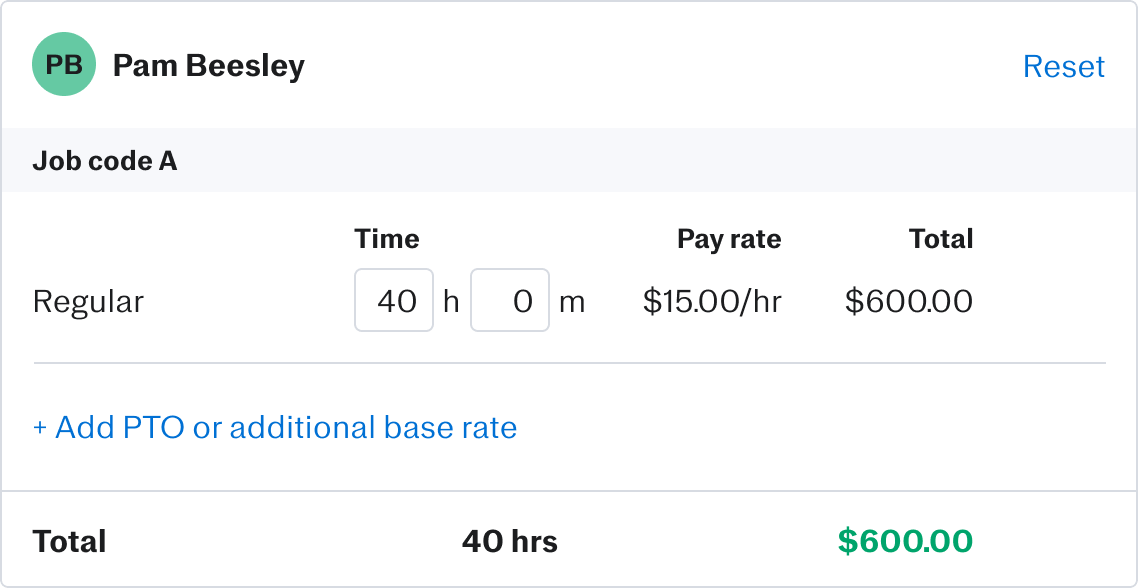
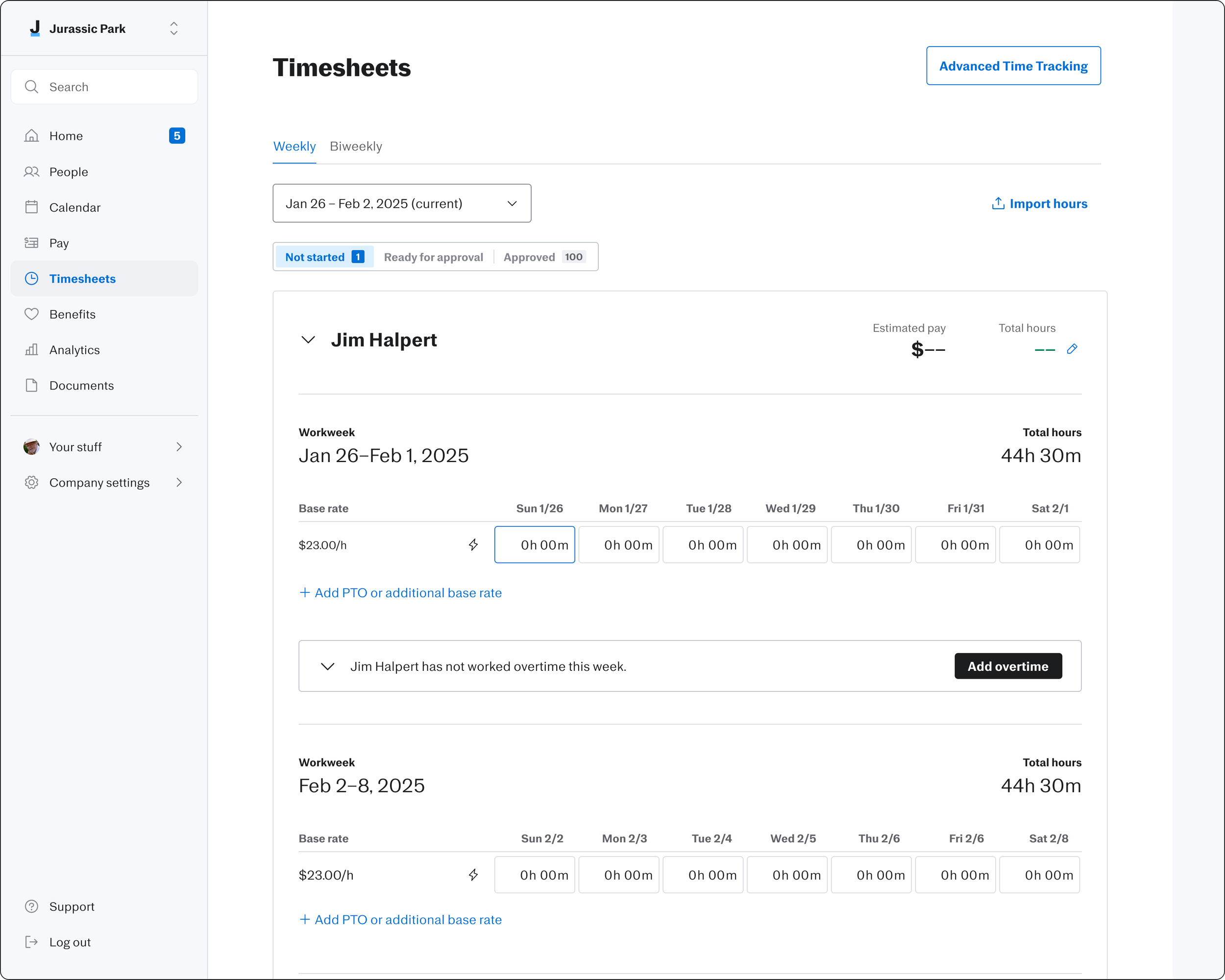
Phase 2 built on the foundation established in Phase 1 by adding automated overtime calculations. We recognized that requiring ASO admins to enter time daily would increase their workload, so we balanced this change by introducing employee time entry on the web and mobile app.
A feature ASO customers previously lacked. Instead of entering time themselves, admins now just review it. For easier navigation, we made the admin and employee interfaces identical, allowing admins to guide employees through timesheets since they're seeing the same thing.
Phase 3: EOR Time Records
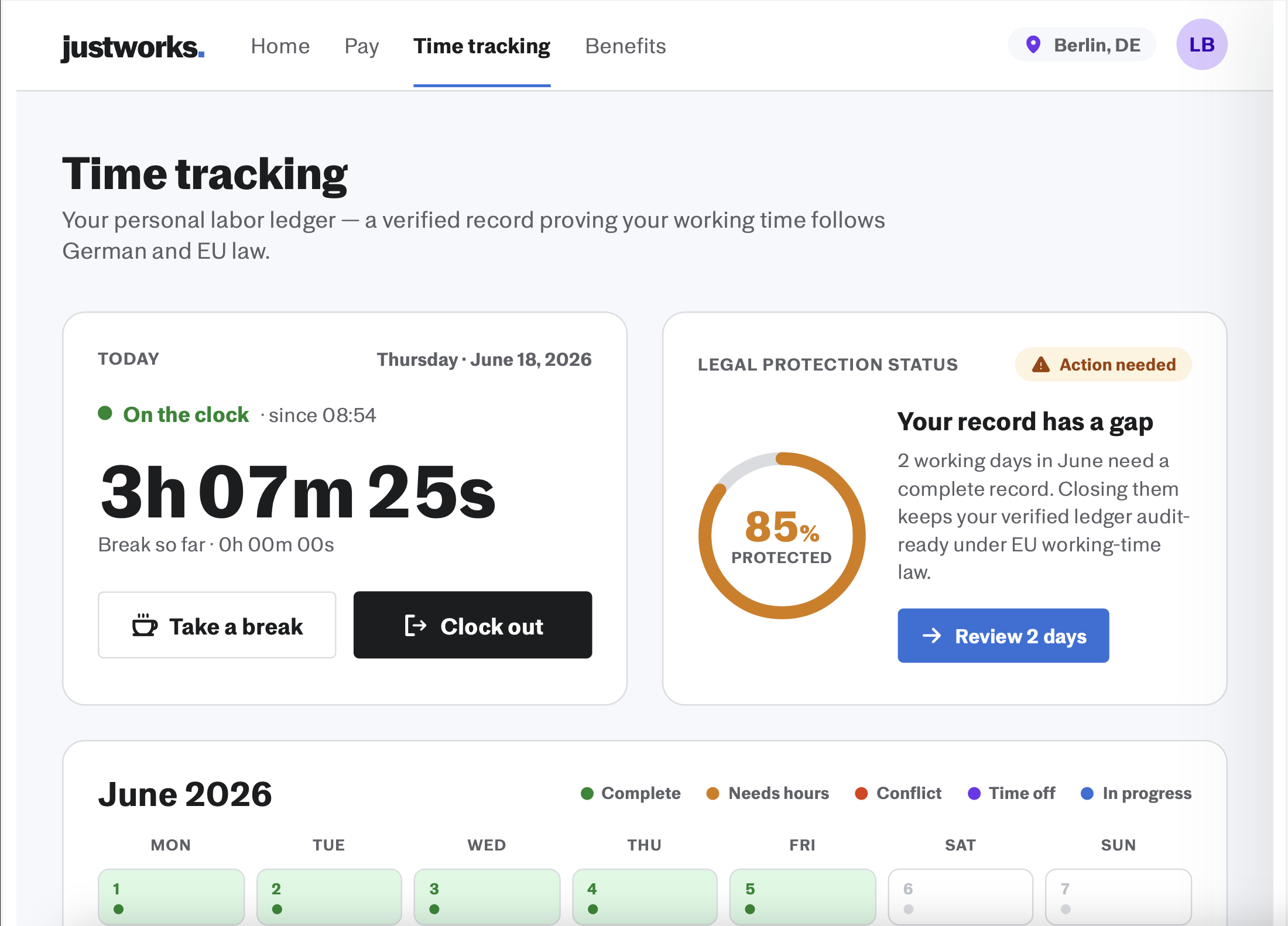
Phase 3 required a complete rethink of the time-tracking mental model. International salaried employees generally do not track time to get paid, so designing the experience around payroll led to low compliance.
I used Claude to explore international employee perspectives, and I decided to take an approach centered on employee protections. This new concept shifts the experience to highlight labor law protections rather than pay, giving employees a more meaningful reason to track their time.
Claude Prompt
[...] The interesting part of this idea is that there is a compliance checker that verifies whether the employee has time tracked on their working days: Monday-Friday. The checker's purpose is to drive completion of the time record. The checker should communicate the employee's legal protection status. Create a page that I can play around with to get a better idea of how something like this might work.
Phase 4: Time Tracking
Phase 4 brings domestic non-exempt time tracking into the unified platform, the most complex phase of the migration. With clock-in and clock-out at the core, the open question is how far to push the existing timesheet interface versus exploring something new.
These are early AI-generated concepts shown to designers to surface reactions and pressure-test directions. Nothing is final.